
Key takeaways
- Most pressure washing and soft washing companies use bleach (sodium hypochlorite) as their main cleaner, usually diluted to a 1 to 3% solution for building exteriors. It works fast, but the runoff can burn plants and lawns, and it’s hard on metal, sealers and some composite materials.
- Bleach-free cleaners use ingredients like hydrogen peroxide-based oxidizers, citric acid and plant-based surfactants to break down dirt, algae, mold and mildew.
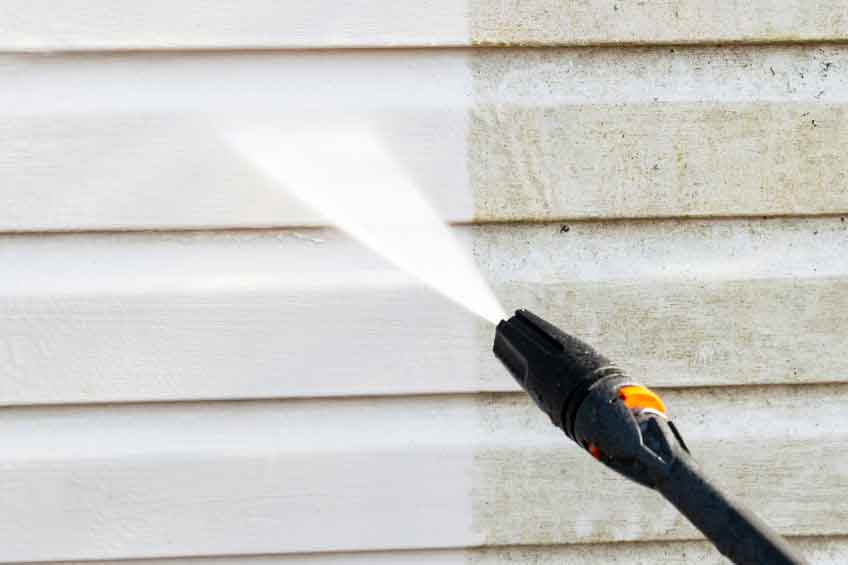
- The pressure has to match the surface. Concrete, dumpster pads and drive-thrus get hot water pressure washing. Siding, roofs and painted surfaces get low-pressure soft washing.
- Soft washing uses far less water than blasting a large wall or roof at high pressure, and it’s easier on building materials.
- Johnny’s cleaning solutions include products that meet EPA Safer Choice standards, including direct-release criteria.
Bleach vs. bleach-free pressure washing: the tradeoffs
Why most companies use bleach
Sodium hypochlorite is the active ingredient in household bleach. Contractors buy it at a much higher strength (often 10 to 12.5%) and mix it down to around 1 to 3% for house and building washes, with the rest being water and a soap that helps it stick. It kills organic growth on contact and lightens stains within minutes.
That speed is why budget contractors rely on it. Short dwell time, a fast visual result and a low cost per gallon mean they can get in and out quickly. The problem is everything around the surface being cleaned.
What bleach-heavy mixes can do to your property
- Plants and lawns. Overspray and runoff can brown or burn shrubs, flower beds and turf, especially in summer heat. Crews using bleach usually soak plants before and after, and still lose some.
- Metal. Bleach is corrosive. Repeated exposure can pit or discolor aluminum trim, light fixtures, railings, door hardware and gutters.
- Composite decking and wood. Strong mixes can discolor composite boards and fade or dry out wood stain.
- Sealers and caulk. Bleach can wear down sealants on pavers, windows and joints faster than normal weathering does.
- Runoff on commercial sites. On a parking lot or drive-thru, whatever goes on the surface ends up at the curb, in the landscaping or in the storm drain.
Pressure washing, soft washing and hot water: matching the method to the surface
The cleaner is only half of it. The other half is how much pressure hits the surface.
High-pressure washing (roughly 2,500 to 4,000 PSI) is the right tool for concrete, but on siding, wood or stucco it can force water behind panels, raise wood grain, etch soft surfaces and damage EIFS. Soft washing applies the cleaning solution at low pressure, about what you’d get from a garden hose, lets it work, and then rinses it off. Hot water adds a third option: heated water breaks down grease and oil that cold water just pushes around.
Here’s how we handle the most common surfaces:
| Surface | Method | Why |
| Sidewalks, storefront entrances, parking areas | Pressure washing with a surface cleaner, hot water when needed | Lifts gum and ground-in dirt evenly without leaving stripes |
| Dumpster pads, drive-thrus, fuel islands | Hot water pressure washing with a degreaser | Heat breaks down grease and oil that cold water leaves behind |
| Loading docks and truck courts | Hot water pressure washing | Removes tire marks, oil and hydraulic fluid |
| Parking garage decks | Pressure washing | Removes winter salt and brine before it eats into the concrete |
| Vinyl siding, painted surfaces, EIFS and stucco | Soft washing with a low-pressure rinse | Keeps water out from behind panels and protects the finish |
| Brick and masonry | Low to moderate pressure, depending on mortar condition | Cleans the face without washing out mortar joints |
| Roofs | Soft washing only | High pressure can strip granules and shorten roof life |
| Wood and composite decks | Low pressure with a wood-safe cleaner | Avoids raised grain and stripped stain |
| Patios and pavers | Pressure washing, with optional polymeric sand and sealing | Clears joints and stains and gets the surface ready to seal |
None of these surfaces need bleach. Grease on a dumpster pad needs heat and a degreaser. Algae on siding needs the right cleaner and enough time to work.
How bleach-free cleaning works
The ingredients that do the work
Bleach-free cleaners use a mix of ingredients, each suited to a different kind of dirt:
- Hydrogen peroxide-based (oxygen) cleaners break down organic stains like algae and mildew through oxidation. They need dwell time, often 10 to 15 minutes, instead of the near-instant reaction you get from bleach.
- Citric acid helps with rust-colored and mineral staining.
- Plant-based surfactants are soaps that lift dirt and help the cleaner cling to vertical surfaces long enough to work.
- Citrus-based degreasers (d-limonene) cut grease and oil on concrete. They have to be rinsed properly and not left to dry on glass or painted surfaces, so dwell time and rinsing are part of the job.
Removing the growth, not just lightening it
A good bleach-free process breaks down organic growth along with the dirt around it, and then a thorough rinse carries it off the surface. Light to moderate growth usually comes off in one visit. Heavy growth that has built up for years on a shaded north wall or roof may need a second application, and we’ll tell you that up front if we see it during the walk-through.
What “EPA Safer Choice” means here
Safer Choice is a U.S. EPA program that identifies cleaning products whose ingredients meet EPA’s criteria for human health and the environment. Our cleaning solutions include products that meet EPA Safer Choice standards, including the direct-release criteria for products used outdoors, where they reach soil and water directly. It’s a big reason we can clean around landscaping, drains and foot traffic with a more environmentally responsible approach than a bleach-heavy mix.
Environmental and property benefits
Less water
With soft washing, the cleaner does most of the work and the rinse is low pressure, so a large wall or roof takes far less water than blasting it at high pressure for hours. On concrete, rotary surface cleaners and hot water cut down on the rinse time needed to get an even result.
Landscaping, pets and people
We still pre-wet plants and rinse them afterward on every job. It’s standard practice for us, whatever the cleaner. At home, keep pets and kids off cleaned areas until they’re rinsed and dry, and we’ll let you know when that is. On commercial sites, we schedule work and block off wet areas so customers, tenants and employees aren’t walking through it.
Longer life for building materials
- Wood porches and decks: low pressure and wood-safe cleaners clean the surface without stripping stain or sealer or raising the grain.
- Metal fixtures and furniture: milder cleaners remove dirt and oxidation without the pitting bleach can cause.
- Masonry, vinyl, EIFS and stucco: controlled pressure keeps water out of the wall instead of driving it in.
- Concrete: regularly removing salt, grease and oil slows the surface wear that leads to scaling and stains you can’t get out.
Commercial and residential: who this is for and how often to clean
Commercial properties
Most of our work is for facility managers, property managers, community association managers and franchise owners. They’re usually dealing with some combination of grease, mold, slip-and-fall hazards, brand or lease appearance standards and upcoming inspections. Common property types include:
- QSR and fast food locations: drive-thru lanes, dumpster pads and front entrances
- Gas stations and c-stores: fuel islands, canopies and sidewalks
- Warehouses and logistics facilities: dock doors, truck courts and building exteriors
- Retail and strip centers: storefront sidewalks, entrances and common areas
- Apartment, condo and HOA communities: building exteriors, breezeways and walkways
- Medical, dental and office parks: entrances, sidewalks and building exteriors
Homes
On the residential side, homeowners call us for house washing, roof cleaning, paver cleaning and sealing, patios and decks, with driveways and walkways often added to a larger exterior package.
How often to clean in the Chicago area
In this region, exterior washing generally runs from April through November, when temperatures stay above 40°F. Southern states with more humidity often need two washes a year on building exteriors. Here, once a year usually keeps growth from building back up. High-traffic and greasy areas are a different story:
| Property area | Typical frequency |
| Building exteriors (siding, brick, EIFS) | Once a year |
| Storefront sidewalks and entrances | Monthly to quarterly, depending on foot traffic |
| Dumpster pads | Monthly or quarterly |
| Drive-thrus and fuel islands | Monthly to quarterly |
| Loading docks and truck courts | Quarterly to twice a year |
| Parking garage decks | Spring salt removal, with a fall cleaning before winter |
| Homes (siding and roof) | Once a year or every other year |
| Patios, pavers and decks | Once a year, with resealing on a schedule we’ll recommend |
Shade, trees, drainage and traffic all change these numbers, so we set the schedule after we’ve seen the property.
Frequently asked questions
Does bleach-free washing kill mold and mildew or just clean the surface?
It breaks down mold, mildew and algae and removes them with the rinse. Light to moderate growth usually comes off in a single visit. Heavy buildup, like years of growth on a shaded wall or roof, may take a second application, and we’ll tell you that before we start.
Is it safe around landscaping, gardens and pets?
We use cleaning solutions that include products meeting EPA Safer Choice standards, and we still take the usual precautions: pre-wetting plant beds, rinsing them afterward and keeping runoff under control. Keep pets inside until cleaned areas are rinsed and dry. We’ll give you a timeframe on the day of the job.
Will washing damage composite decks or wood porches?
Not when the pressure is set for the surface. We clean decks and porches at low pressure with a wood-safe cleaner, which avoids the raised grain, stripped stain and discoloration that high PSI or strong bleach mixes can cause.
How long do the results last?
For most building exteriors in the Chicago area, about a year. Shaded walls, roofs under trees and surfaces near sprinklers can come back sooner. High-traffic concrete, dumpster pads and drive-thrus need more frequent cleaning, which is why many commercial clients set up a recurring program.
Can commercial pressure washing be scheduled around business hours?
Yes. We regularly work early mornings, evenings, overnights and weekends, and we schedule around shift changes, deliveries and tenant needs so the work doesn’t get in the way of your business.
Does bleach-free pressure washing work on concrete, grease and oil?
Yes. Bleach was never the right tool for grease anyway. For dumpster pads, drive-thrus, fuel islands and loading docks, we use hot water pressure washing with a degreaser, which breaks down grease and oil far better than cold water.
How Johnny’s Pressure Washing helps
Local and family owned since 2006
Johnny’s has been family owned and operated since 2006. We work across the Southwest Chicago suburbs and Northwest Indiana, including Tinley Park, Orland Park, Chicago Ridge and Palos Park, and the commercial corridors that run from Elk Grove Village to I-55 and Route 30. Our clients deal directly with us, not a national franchise call center, and they see the same crews from one visit to the next. If you’re looking for [local commercial and residential pressure washing experts](LINK: Homepage), that’s who we are.
Commercial-grade equipment and a plan for every surface
We own our equipment: hot water pressure washers, rotary surface cleaners and soft wash systems. We never show up with gear rented from a hardware store. Before we start, we walk the property, recommend a method for each surface, and talk through brand appearance standards, lease requirements and how drainage and runoff work on your site.
One-time cleanups, multi-site pricing and recurring programs
We clean storefronts, dumpster pads, drive-thrus, fuel islands, building exteriors, dock doors, breezeways, parking garages and residential surfaces. You can book a one-time deep clean, get pricing across multiple sites, or set up a recurring maintenance program. Learn more about our [commercial building exterior and portfolio maintenance](LINK: Commercial Pressure Washing), or for homes, our [eco-friendly soft washing for residential siding and decks](LINK: House Washing / Soft Washing).
Get a free quote
Whether you manage one location or a full portfolio, or you just want your house and patio cleaned without bleach, call 708-856-8901 or request a free estimate online.
Here’s what happens next:
- Contact Johnny’s by phone or through our online form.
- We walk the property and recommend the right method for each surface.
- You approve upfront pricing.
- We complete the work on schedule.