
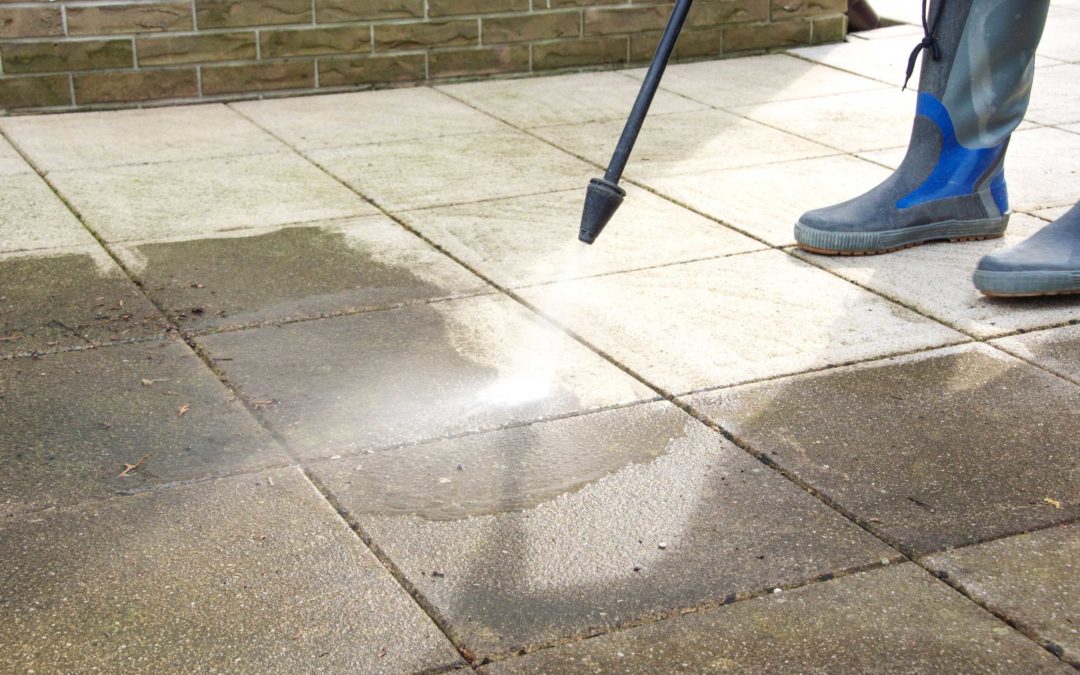
If you’ve paid to have a drive-thru or dumpster pad washed and it still looked dirty a week later, the water was probably cold. Cold water is fine for dirt. It does very little to cooking grease, motor oil or chewing gum, because those need heat to break down.
We’ve been pressure washing across the Southwest suburbs and Northwest Indiana since 2006, and our commercial rigs heat water to around 200°F before it touches your concrete. We use it on drive-thrus, dumpster pads, fuel islands, loading docks and parking decks, and at home on the oil stain at the end of the driveway. We leave it off most siding, where heat can do more harm than good.
What Hot Water Does That Cold Water Can’t
A commercial hot water pressure washer has a burner and a steel heating coil built into the machine. Water runs through the coil, a diesel or fuel oil burner heats it, and it comes out of the wand at 190°F to 200°F. That’s the same reason you wash a greasy pan with hot water instead of cold.
Three things happen when the water is that hot:
- Grease and oil let go. Heat lowers the water’s surface tension and softens fats, oils and proteins, so the pressure lifts them off instead of smearing them around.
- We use less soap. Heat does most of the work on grease, so we need less detergent and fewer passes on the same surface.
- Bacteria drop. Nilfisk cites a study where cold water had no effect on bacteria counts, while 140°F water cut bacterial colonies by 90%. On a dumpster pad, that’s the difference between clean-looking and clean-smelling.
To be clear on that last point: hot water reduces bacteria, but it isn’t a certified disinfection. If your location needs documented sanitizing for an inspection, tell us during the walk-through and we’ll plan for it.
The Equipment Matters
You can rent a hot water unit, but the machines built for daily commercial work are a different class of equipment. Here’s what that class looks like:
| Spec | Commercial-grade range | What it means on your job |
|---|---|---|
| Pressure | 2,000 to 5,000 PSI | Enough force for embedded grime, adjusted to the surface |
| Flow | 3 to 10 gallons per minute | More water moves loosened grease off faster on big lots and decks |
| Temperature | About 190°F to 200°F | Hot enough to break down grease and oil quickly |
| Heating coil | 1/2-inch Schedule 80 steel pipe, heavier on 5,000 PSI units | Holds up to constant heat and pressure all day |
People tend to ask about PSI. On a large parking deck, flow has more to do with how long the job takes.
Hot Water vs. Cold Water: How We Decide on Your Property
We don’t run hot water on everything. Before we quote a job, we walk the property and match the method to each surface. A gas station might get hot water on the fuel islands and a soft wash on the canopy fascia, all in the same visit.
| Surface or problem | Cold water | Hot water | What we usually use |
|---|---|---|---|
| Dirt, pollen and mud on walkways | Works well | Works | Cold |
| Mildew and algae on siding | Works with a soft wash | Heat can damage vinyl and paint | Soft wash, bleach-free |
| Oil stains on concrete | Lightens them | Lifts them | Hot |
| Drive-thru and back-door grease | Smears it | Melts and rinses it | Hot |
| Chewing gum on sidewalks | Very slow | Softens and lifts it | Hot |
| Dumpster pad waste and odor | Surface clean only | Cleans and cuts bacteria | Hot |
| Salt and brine on parking decks | Partial | Dissolves and flushes it | Hot |
| Truck and equipment road film | Partial | Removes it | Hot |
The short version: petroleum, food grease and gum get heat. Dirt and organic growth usually don’t need it.
Should You Buy Your Own?
Some facility managers ask whether it makes sense to buy the best commercial hot water pressure washer they can find and have their own crew handle it. Sometimes it does. Here’s what you’d be signing up for:
| Cost | Cold water | Hot water |
|---|---|---|
| Entry-level machine | $300 to $2,000 | $2,000 to $6,000+ |
| Professional gas skid or trailer unit | Varies | About $6,000 to $16,000 |
| Heat-rated hoses | Not needed | About $125 to $300 each |
| Upkeep | Pump service | Pump service, coil descaling, burner tune-ups |
Add fuel, training, and someone’s time pulled off their regular job. If you’d use it every week, owning can pay off. If the machine would sit in a garage between quarterly cleanings, a scheduled service usually costs less, and the upkeep becomes our problem instead of yours.
Where We Use Hot Water on Commercial Properties
Restaurants, Gas Stations and Retail Centers
On Route 30 through Tinley Park, Orland Park and Matteson, or Route 59 in Naperville and Aurora, customers see your lot before they see your counter. Here’s where hot water earns its keep.
- Drive-thru lanes, menu board pads and back-door entrances where grease tracks out
- Dumpster pads and grease bin areas, which draw flies and pests when they’re left dirty
- Overnight or early morning cleanings so lanes are open by breakfast
- Help staying ready for health inspections and franchise appearance audits
Kitchen hood and duct interiors are a separate, code-regulated service. We take care of the grease that ends up on the ground outside.
- Oil drips and fuel residue on fuel islands and under the canopy
- Drive lanes, parking stalls and storefront entries
- Dark, slick spots that make a station look neglected and raise slip risk
Retail centers and strip plazas
- Stained concrete in front of storefronts
- Embedded gum that cold water won’t move
- Sidewalks, entrances and common areas on a set schedule for landlords and tenants
Warehouses, Fleets and Property Portfolios
The warehouse and freight areas around Elk Grove Village, CenterPoint Intermodal in Elwood and Joliet, the I-55 corridor in Romeoville and Bolingbrook, and Bensenville, Wood Dale and Itasca near O’Hare deal with diesel, rubber and hydraulic fluid every day.
Warehouses and distribution centers
- Dock doors, dock aprons and loading zones
- Tire marks, oil and hydraulic fluid in truck courts
- Shop floors and maintenance bays
Fleets and equipment
- Box trucks, tractors and service vans, washed at your yard so vehicles stay on the lot
- Excavators and job site equipment between projects
Apartments, HOAs and office parks
- Winter salt and brine flushed off parking garage decks before it eats into the concrete
- Oil stains in garages and parking stalls, part of our commercial concrete cleaning
- Building exteriors, breezeways and stairwells across every property in a portfolio, including office parks in Oak Brook and Oakbrook Terrace
Where It Helps at Home
Most of what we clean on a house doesn’t need hot water. Siding, roofs and painted trim get a low-pressure soft wash, because heat and high pressure can damage them. Where hot water does help at home is on the stains that act like the ones we see on commercial lots:
- Oil and transmission fluid stains on driveways and garage floors
- Grease around outdoor kitchens and grill areas on patios
- Gum, tar and tire marks on concrete
- Deep stains on pavers before we re-sand them with polymeric sand and seal them
We usually handle driveways and concrete as part of a larger residential exterior package with the house wash, patio, walkways or paver restoration, so everything gets cleaned in one visit.
Powerful Exterior Cleaning Without Bleach
Our house washing process is bleach-free. It’s designed to get professional results while taking a more environmentally responsible approach around your home, landscaping and the rest of your property. Our cleaning solutions include products that meet U.S. EPA Safer Choice standards, including direct-release criteria.
How We Work With Businesses
We’re a family owned and operated company, not a national franchise. When you call, you’re dealing directly with the family that runs the company, and you’ll see a familiar crew from one visit to the next.
If you manage commercial property, you’ve probably had a contractor show up with rented hardware store equipment, miss the scheduled date, or leave oil stains lighter but still there. We own our commercial-grade equipment, we show up when we say we will, and we stick to the same process at every location. You can read what our customers say on our reviews page.
A Smarter, Bleach-Free Approach to Commercial Exterior Cleaning
Our commercial pressure washing programs are built for facilities that want professional results without relying on traditional bleach-based washing. We use environmentally conscious cleaning solutions, including products that meet U.S. EPA Safer Choice standards and direct-release criteria. Hot water also means we need less detergent on greasy surfaces in the first place.
Scheduling and Recurring Programs
A one-time cleanup fixes what’s there today. A recurring program keeps it from building back up between visits.
- We schedule around business hours, shift changes and tenant needs, including overnight and early morning work.
- You pick the frequency: weekly, monthly, quarterly or twice a year, based on how fast each site gets dirty.
- Franchise operators, HOA boards and facility directors with several properties get one point of contact, the same standard at every location, and pricing built for multiple sites.
A clean property helps with the things that cost you money when they go wrong: slip and fall claims, failed health inspections, missed lease or franchise appearance standards, and concrete that wears out early under salt and oil.
Questions We Get
What is a hot water pressure washer used for?
Grease, oil, gum, tar, hydraulic fluid and salt film. Anything petroleum-based or food-based breaks down much faster with heat. For ordinary dirt and mildew, cold water and the right cleaning solution usually do the job.
Do I need a one-time cleanup or a recurring program?
If the property hasn’t been cleaned in a while, we usually start with a deep cleaning to reset it. After that, recurring service costs less per visit because there’s less buildup each time. We’ll recommend a frequency after we see the site.
My franchise has appearance standards. Can you work to them?
Yes. Send us the brand standard or the audit checklist and we’ll build the scope around it, so every location is ready when the inspector or district manager shows up.
Can you work after hours or around shift changes?
Yes. Overnight and early morning cleanings are common for restaurants, retail centers and warehouses that can’t shut down during the day.
Do you offer multi-site or portfolio pricing?
Yes. If you manage several restaurants, stations, buildings or communities, we’ll quote them together and keep one schedule and one point of contact for all of them.
How do you handle runoff?
We look at drains and drainage during the walk-through and plan the wash around your property and local requirements. Our bleach-free cleaning solutions include products that meet U.S. EPA Safer Choice standards, including direct-release criteria.
Where can I find hot water pressure washing near me?
We serve the Southwest Chicago suburbs and Northwest Indiana, including Tinley Park, Orland Park, Chicago Ridge, Palos Park, Joliet, Romeoville, Bolingbrook, Naperville, Oak Brook, Elk Grove Village, Merrillville and Crown Point. See the full list on our areas served page, or call and ask if you don’t see your town.
Schedule a Free Property Walk-Through
Whether it’s one restaurant, a warehouse, a portfolio of buildings or your own driveway and patio, the first step is the same. Request a free quote online or call us at 708-856-8901.
- We walk the property. We look at every surface, point out what needs hot water and what doesn’t, and ask about your schedule.
- You approve the price up front. You see the full price before any work starts, with one-time and recurring options if you want them.
- We do the work on schedule. Same crew standard, same process, on the date we agreed to.
If you manage more than one site, ask about multi-site or recurring pricing when you call.