
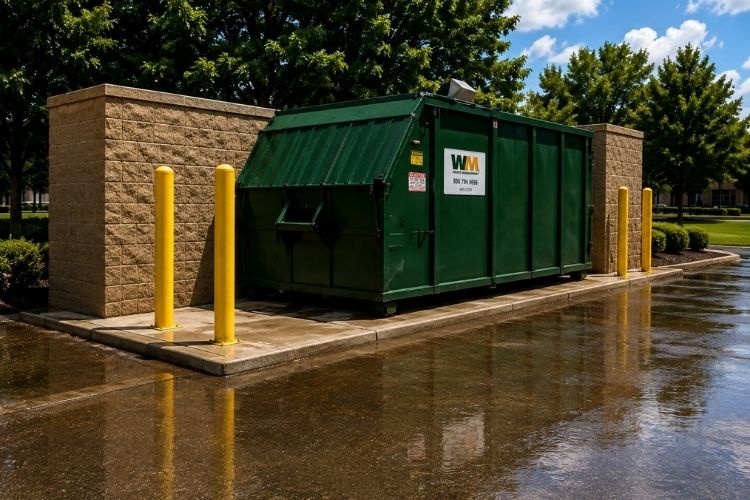
Most restaurant owners don’t think much about the dumpster pad until someone else brings it up. Sometimes it’s the health inspector. Sometimes it’s the landlord, or a customer on the patio asking what that smell is. By then the concrete back there has usually been soaking up grease for months.
We’ve been cleaning dumpster pads, drive-thrus and back docks across the Southwest suburbs and Northwest Indiana since 2006. Below is what we see on these pads, why they’re worth keeping up with, how often they need it and what goes into the price. If you already know you need it done, our dumpster pad cleaning and degreasing page has the service details.
What Builds Up on a Dumpster Pad
A dumpster pad at a busy restaurant takes a beating every day. Bags leak on the way out the back door. Grease drips when it gets carried to the rendering bin. Food scraps miss the dumpster, and garbage trucks leave oil behind every time they pick up.
Concrete is porous, so all of that soaks in. Rain doesn’t wash it away. It just spreads it around the enclosure and out toward the parking lot. After a few months you have layers of old grease and food waste baked into the surface, and that’s where the smell comes from.
Why It’s Worth Keeping Clean
Health Inspections
Inspectors look outside too. Illinois has adopted the 2022 FDA Food Code, which requires refuse storage areas and enclosures to be kept clean. A dumpster pad covered in grease and old food is an easy thing for an inspector to write up.
Pests
Grease and food waste are what draw rats, flies and roaches to the back of a building. Cleaning the pad takes away the food sitting on the concrete. It won’t replace your pest control service, but it gives them a lot less to fight.
Slips and Grease Tracked Inside
Your crew walks across that pad and right back into the kitchen. So do delivery drivers. A greasy pad is a slip risk outside and a mess on the kitchen floor inside.
The Concrete Itself
Fats and oils that sit on concrete for years break down the surface and leave stains that won’t come out. Replacing a dumpster pad costs a lot more than keeping it clean.
Brand Standards and Lease Terms
If you run a franchise location, your brand has appearance standards, and the back of the building counts. If you own or manage a strip center, a dirty enclosure behind one tenant becomes a problem for the tenants next door. We work with restaurants and drive-thrus, gas stations and retail centers on exactly this.
Why a Hose or a Rental Unit Won’t Get It Clean
Cold water moves dirt fine. On grease, it mostly pushes the mess from one side of the pad to the other. Grease needs heat to break loose, and that’s why our commercial rigs run hot water. We wrote more about this in our post on commercial hot water pressure washing.
The pressure washers you can rent at a hardware store don’t heat water. Some contractors use them anyway. The pad looks better for a week, and then the smell comes back because the grease underneath never came up.
How We Clean a Dumpster Pad
- We look at the pad, the enclosure and where the water will drain before we start.
- We pick up loose trash and debris so nothing ends up in the wash water.
- We apply a degreaser and give it time to work into the buildup. Our process is bleach-free, and our cleaning solutions include products that meet EPA Safer Choice standards. You can read more about that in what bleach-free pressure washing means for your property.
- We wash the pad, the enclosure walls and gates, and the approach where trucks pull in, all with hot water.
- We treat the area for odor once it’s clean.
- We set up a schedule with you so it doesn’t get back to where it started.
For a pad that hasn’t been touched in a long time, the first visit takes the most work. Visits after that go faster because we’re not cutting through years of buildup.
How Often Should a Dumpster Pad Be Cleaned?
It depends on how much food waste goes through the enclosure. This is where most of our clients land:
| Type of Location | Typical Schedule |
|---|---|
| High-volume kitchens and busy QSRs | Every 4 weeks |
| Moderate-volume restaurants and mixed retail | Every 6 to 8 weeks |
| Low-volume or seasonal properties | Quarterly |
The dumpster pad usually needs cleaning more often than the rest of the property. A strip center might only need its sidewalks and concrete done a few times a year while the pad behind the restaurant tenant needs it monthly. If you can smell the enclosure from the parking lot between visits, the visits are too far apart.
What Dumpster Pad Cleaning Costs
We don’t post a flat price because no two pads are the same. These are the things that move the number:
- The size of the pad and enclosure, plus how much of the surrounding approach needs cleaning
- How heavy the grease and oil buildup is, especially on a first visit
- Whether it’s a one-time cleanup or a recurring schedule
- How many locations you want covered
- Whether the work has to happen after hours
Recurring service costs less per visit than a one-time emergency cleanup, mostly because the pad never gets bad enough to need the heavy first-visit work again. If you manage several properties, ask us about multi-site pricing. We’ll walk the property and give you a price up front before any work starts.
While We’re There
Most clients don’t stop at the dumpster pad. The same grease shows up in drive-thru lanes, around fuel islands and at the back door where deliveries come in. For warehouse and distribution clients it’s the loading docks. Bundling these into one visit usually makes more sense than scheduling each one separately.
We still do homes, too. If you need your house, patio or driveway cleaned, see our residential pressure washing and soft washing services.
Questions We Get
What’s the difference between pressure washing and power washing?
In our industry, power washing usually means hot water and pressure washing means cold water. Both use pressure. For a dumpster pad you want heat, because cold water alone won’t lift grease.
How often should a commercial dumpster pad be cleaned?
Most restaurant dumpster pads need it every month or every other month, depending on how much food waste goes through them. Lower-volume properties can often go quarterly. Check the table above for the breakdown.
Can you clean after business hours?
Yes. We schedule around your hours, shift changes and deliveries so we’re not in the way of your crew or your customers.
Will cleaning the pad help with health inspections and pests?
It helps. A clean enclosure is part of what inspectors look for, and taking away the grease and food waste gives pests less reason to be there. It doesn’t replace your pest control service or your own daily housekeeping.
Is power washing safe for concrete, pavers and outdoor patios?
Yes, when the pressure is set for the surface. We adjust for concrete, brick and pavers so we clean the surface without damaging it.
Do you offer multi-site or portfolio pricing?
Yes. We work with franchise owners, property managers and landlords who need the same schedule across several locations.
Where do you work?
We cover the Southwest Chicago suburbs and Northwest Indiana, including the Route 30 corridor, the I-55 corridor through Bolingbrook and Romeoville, Elk Grove Village and Oak Brook. See the full list on our areas served page.
Schedule a Free Property Walk-Through
Johnny’s Pressure Washing is family owned and operated and has been cleaning commercial properties around Chicago since 2006. Here’s how getting started works:
- Contact us online or call.
- We walk the property and give you a price up front.
- We do the work on the schedule we agreed on.
Request a free quote online or call us at 708-856-8901. If you have more than one location, ask about multi-site pricing when you call. You can also read what our customers say first.